Rental law
What is an état des lieux, and why does it decide your deposit?
The inventory of fixtures is the document that settles arguments about damage months later. When it must be done, who does it, and how to make yours useful.
By Daniela Pelliccia · Published October 12, 2026 · 8 min read
Updated October 31, 2026
Share on Facebook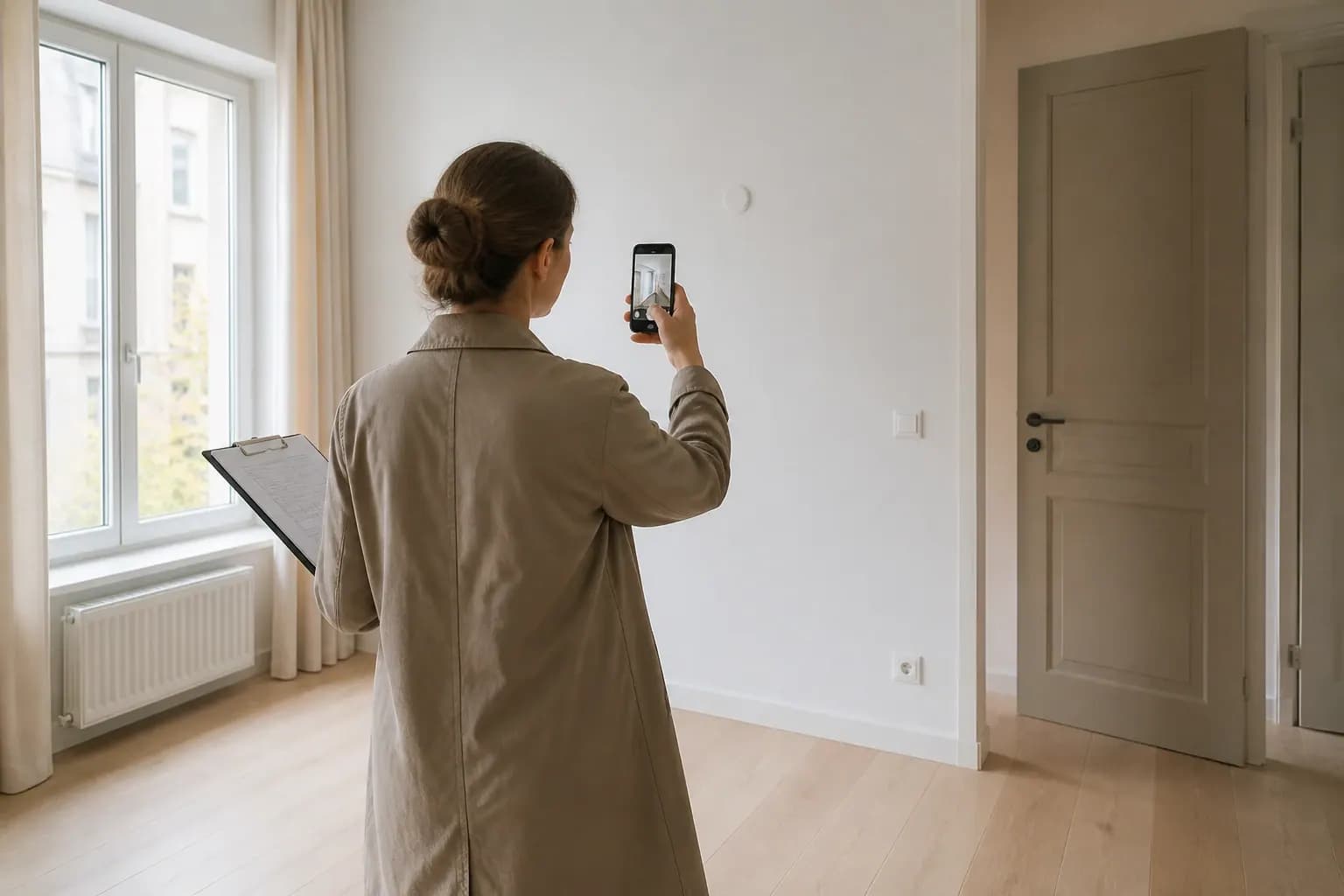
What is an état des lieux?
It is the written record of the condition of a rented property, agreed between landlord and tenant. One is made when you move in, and normally another when you leave. The difference between the two is what decides whether a mark on a wall is ordinary wear or something you pay for.
It is the least interesting document in a tenancy and the one most likely to matter. Almost every deposit dispute in Luxembourg is, underneath, an argument about what the flat looked like on day one.
When must it be made?
At the latest, when you move into the property. Not at some convenient point afterwards, and not weeks later once you have settled in.
That timing is worth defending. An inventory taken after your furniture arrives cannot see the floor, the walls behind the wardrobe, or the inside of the cupboards — which is precisely where the disagreements happen later. If a landlord or agency suggests doing it "once you're in", ask to do it on handover day instead, before anything is carried through the door.
There is a related point that catches people out: the inventory is separate from signing the lease. Signing the contract at an agency office in March does not produce an inventory of a flat you take possession of in May.
Is an exit inventory required?
No — there is no legal obligation to draw up an exit inventory.
It is nonetheless strongly recommended, and refusing one is against your own interest whichever side of the tenancy you are on. Without an exit document there is no agreed account of the state you left the property in, and the conversation about the deposit becomes a matter of recollection.
If your landlord does not propose one, propose it yourself. Do it on the day you hand over the keys, with both parties present, and take photographs regardless.
Who draws it up?
Normally the landlord and tenant together, or their representatives. That is the cheapest route and the usual one.
Where the relationship has broken down badly enough that the parties no longer want direct contact, the inventory should be drawn up by an independent person agreed in advance between them. Guichet.lu names the obvious candidates: a huissier de justice, an estate agent, or an architect.
Two things follow from that. The independent route costs money, which is normally shared, so it is worth reserving for cases that genuinely need it. And the agreement on who that person is has to come first — appointing someone unilaterally and presenting the result is not the same thing.
What you must return, and what you must not be charged for
The tenant's obligation is to return the property in the same state it was received, subject to the exception that matters most:
Deterioration due to normal use, wear, or ageing is not tenant damage and must not be charged to the tenant.
That single sentence is the answer to a great many deposit disputes. Paint that has dulled over four years, a carpet worn along the route between door and sofa, sealant that has aged, a mechanism that has failed with time — none of that is yours to pay for. It does not even need to appear in an exit inventory.
What does fall to you is damage: an event or a neglect rather than the passage of time. The useful test is whether time alone, with ordinary careful use, would have produced it.
How to make your inventory actually useful
Most inventories are useless because they are vague. "Kitchen: good condition" tells you nothing eighteen months later, and a vague document favours whoever argues more confidently.
- Name defects specifically. Not "some marks" but "living room: two scuffs on wall left of window, approx. 5 cm, at skirting height".
- Go room by room, and include what is not a room. Cupboard interiors, the oven, the fridge seal, the balcony, the cellar, the letterbox.
- Record what you were given. Number of keys, badges, remote controls, meter readings. Missing keys are a routine deduction and an avoidable one.
- Photograph everything, dated. Email the photographs to yourself so the date is not merely a claim.
- Do not sign a document you disagree with. Add your remarks in writing before signing. An inventory is a joint document, not something handed to you to accept.
- Keep your copy. If you are given a single copy to share, photograph every page before you leave.
For landlords
The same document protects you, and for the same reason: it is evidence. A landlord with a specific, dated, jointly signed entry inventory is in a straightforward position when something is genuinely damaged. A landlord without one is relying on memory.
Three habits worth having:
- Do the entry inventory on handover, with the tenant present, and hand over a signed copy.
- Distinguish clearly between what you are recording as a defect and what you intend to repair.
- When you deduct from a deposit, be able to show the cost — an invoice or a quote, tied to a line in the inventory. A deduction traceable to a specific recorded defect is very rarely argued with; a round number always is.
For a furnished letting, keep a separate inventory of the furniture itself: which items, which condition.
Frequently asked questions
Can I refuse to sign the inventory? You can decline to sign one you disagree with, but a better move is to sign with written reservations noting exactly what you dispute. That records both the document and your objection.
What if the landlord never proposed an inventory at all? Ask for one in writing, before or on the day you move in. If you have already moved in without one, photograph everything now, dated, and send the landlord a written note of the property's condition. It is not as good as a joint document, but it is very much better than nothing.
Does the inventory have to be on a particular form? No standard form is imposed. What matters is that it is written, specific, and signed by both parties.
Who pays for an independent expert? It is a shared cost in the normal case, but agree that in advance along with the choice of person.
Can the exit inventory list things that are just old? It can list them, but wear and ageing are not chargeable to you. Listing is not the same as charging.
Before you move in
- Insist the inventory happens on handover day, before the furniture
- Walk every room, and open every cupboard
- Name each defect specifically, with a size or a location
- Record keys, badges and meter readings
- Photograph everything and date it
- Sign with written reservations rather than signing something inaccurate
This article is general information, not legal advice. Rules change and circumstances differ; check the official sources below or seek advice for your own situation.
Sources
- Particularities of the inventory of fixtures for a residential lease — Guichet.lu
- Residential lease agreements between tenants and landlords — Guichet.lu
Looking for a well-managed home in Luxembourg? See what is available through D2Casa.