Renting in Luxembourg
What documents do you need to rent in Luxembourg?
A complete rental file gets you the flat. What Luxembourg landlords actually ask for, what to do if you have no local history yet, and how to present it.
By D2Casa Administrator · Published September 14, 2026 · 7 min read
Share on Facebook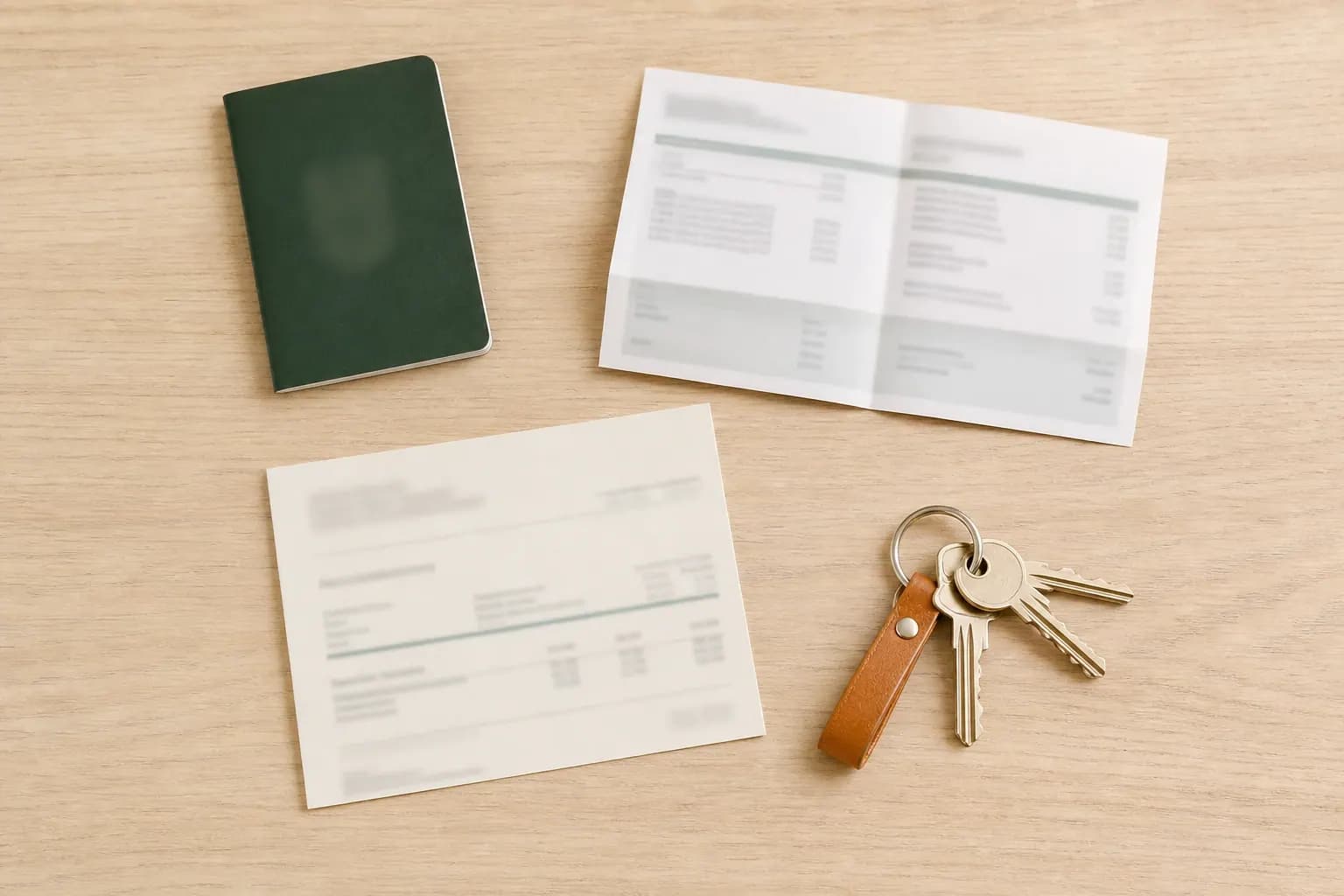
What will a landlord ask for?
There is no statutory list of documents a Luxembourg landlord must request. What follows is market practice — consistent enough across agencies that you can prepare for it, but not a legal requirement, and it varies between a large agency and someone letting a single flat.
Most files come down to four questions: who are you, what do you earn, is that income stable, and have you rented well before?
| Question | Usual evidence |
|---|---|
| Who are you | Passport or ID card, for every adult on the lease |
| What do you earn | Recent payslips, typically the last three |
| Is it stable | Employment contract, or a letter from your employer |
| Have you rented well | Previous landlord reference, recent rent receipts |
Some agencies add a bank statement, a déclaration de non-endettement, or a copy of your residence permit where relevant. None of that is unusual.
Proof of income, and the ratio behind it
Most landlords work to a rough affordability rule: rent should not exceed roughly a third of net household income. It is a convention rather than a rule, and it is applied with some judgement, but it explains why the income evidence carries the most weight in your file.
If you are two people on the lease, both incomes count. Say so early, and provide both sets of payslips — a file that looks marginal on one salary can look comfortable on two.
If you are self-employed
Expect to substitute the payslips with:
- your last one or two tax assessments
- recent bank statements showing income arriving
- a company registration document, if you have one
Self-employment is not a barrier here, but it does mean your file needs to tell the story that a payslip would otherwise tell in one line. Consider writing a short covering note explaining what you do and what your income has looked like over the last year.
If you have just arrived in Luxembourg
This is the genuinely hard case, and it deserves an honest answer: you will be asked for documents you do not have yet. No Luxembourg payslip, no local bank account, no rental history here.
What tends to work:
- Your signed employment contract, which is often the single most persuasive document a newcomer has. It shows the salary and the start date.
- A letter from your new employer confirming the role, the salary, and that the position is permanent.
- Payslips from your previous country, with a short note on the currency and the equivalent.
- A reference from your previous landlord, translated if necessary. This matters more than people expect — it is the only evidence that you are a good tenant rather than merely a solvent one.
- Proof of savings, if your start date is some way off.
Two practical suggestions. Have documents in French or English if you can; German is also widely read. And accept that the first flat may be the hardest — once you have six months of Luxembourg payslips and a local reference, the second application is a different conversation.
Students and interns
A student file usually rests on someone else. Expect to provide:
- your enrolment certificate
- your identity document
- a guarantor's file: their identity, income and employment
A guarantor undertakes to pay if you do not, so the landlord will assess them roughly as they would a tenant. A guarantor based outside Luxembourg is sometimes accepted and sometimes not — worth asking before you build the whole application around one.
For shorter stays, a room in a shared home is usually easier to secure than a studio, because the file requirements tend to be lighter and the commitment is shorter on both sides.
How to present the file
The presentation genuinely affects the outcome, because agents are comparing several applications for the same flat and yours competes on how easy it is to say yes to.
- One PDF, in order, rather than eleven photographs of paper.
- Name the file with your surname and the property reference.
- Lead with a short note: who you are, what you do, when you want to move in, who will live there.
- Answer the obvious question before it is asked. A gap in employment, a recent move, an unusual contract — a sentence of explanation is far better than a hole in the file.
- Send everything at once. A file that arrives in three instalments looks like three chances to be forgotten.
A word on your personal data
You are handing over identity documents, income details and sometimes a bank statement. It is entirely reasonable to ask an agency what a particular document is used for, how long it is kept, and who has access to it — and a professional agency will answer without fuss.
If a request seems disproportionate to renting a flat, ask what it is for. Being asked is normal; being unable to explain the purpose is not.
Timing matters more than the file
In a market this tight, the best-prepared file loses to a good-enough file that arrived first. Have your documents assembled as a single PDF before you start viewing, so that applying takes minutes rather than an evening.
Aim to send your application the same day as the viewing while you are still fresh in the agent's mind.
Frequently asked questions
Do I need a Luxembourg bank account before I can rent? Not usually to apply, though you will need one to set up the standing order. If you have not opened one yet, say so rather than leaving a gap.
Can a landlord ask for several months of rent in advance instead of a deposit? The deposit is capped at two months' rent. An arrangement that recreates a larger deposit under another name is worth questioning.
Do I have to provide a criminal record extract? It is sometimes requested. As with anything else in the file, you are entitled to ask what it is used for.
Will a landlord accept a foreign guarantor? Some will, some will not, largely because enforcing an undertaking abroad is harder. Ask before you rely on it.
Does everything have to be translated? Not always, but French, German or English will be read without difficulty. Anything else is worth translating, at least in summary.
Your checklist
- Identity document for every adult on the lease
- Last three payslips, or tax assessments if self-employed
- Employment contract or employer's letter
- Previous landlord reference
- Guarantor's file, if you are a student or your income is thin
- Everything in one named PDF, ready before your first viewing
Once your application is accepted, the lease itself must be in writing and carry a set of mandatory clauses — worth reading closely before you sign.
This article is general information, not legal advice. Document practices vary between landlords and agencies; the legal points above are sourced below.
Sources
- Residential lease agreements between tenants and landlords — Guichet.lu
- Revision of the rental lease legislation — Government of Luxembourg, 10 July 2024
Ready to start viewing? See what is available through D2Casa.